This post is also available in:  العربية (Arabic)
By Dr. Hossam Elbarbary, Consultant Ophthalmologist
Welcome to my blog! As a specialist in eye health here in Dubai, I often hear from patients suffering from tired, dry, or strained eyes after a long day of work. If your eyes ache from hours spent on your laptop, smartphone, or tablet, please know you are not alone—it’s a modern epidemic. This post is dedicated to giving you the easy, practical advice you need to find immediate relief and protect your vision for years to come.
Table of Contents
The Role of Screens in Our Daily Lives
In our modern world, screen time is no longer just for work—it’s how we read, connect, shop, and relax. From the moment we check our phones in the morning to watching TV at night, our eyes are constantly focused on digital devices.
To effectively address this issue, many individuals are exploring different solutions aimed at digital eye strain relief, seeking comfort and clarity in their daily screen interactions.
While screens are essential, this constant focus can lead to a condition called Digital Eye Strain (or Computer Vision Syndrome), causing discomfort, fatigue, and even temporary blurred vision. To combat this, many are seeking digital eye strain relief through various methods. Understanding these methods is key to finding effective digital eye strain relief for your comfort and well-being.
The good news? A few simple, daily habits can make a profound difference. Here is your essential guide to keeping your eyes comfortable and healthy in the digital age.
By following these tips, you can achieve significant digital eye strain relief and maintain your eye health in the long run.
1. Master the 20-20-20 Rule (It Really Works!)
Digital Eye Strain Relief: Essential Tips for Comfort
This is the single most important rule for screen users. When we stare at a screen, we blink less (up to 66% less!), leading to dry eyes and fatigue.
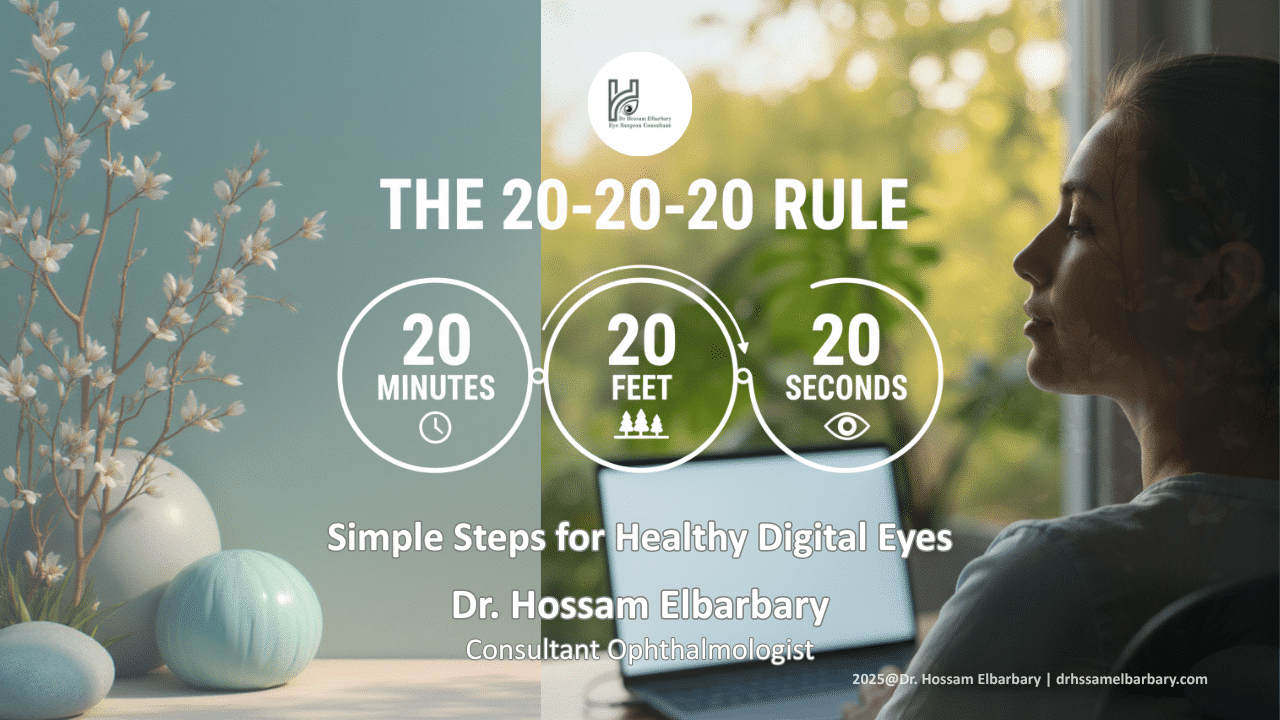
The 20-20-20 Rule is simple:
- Every 20 minutes…
- Look away at something 20 feet (about 6 meters) away…
- For at least 20 seconds.
This small break allows your focusing muscles to relax and encourages your eyes to blink normally, naturally rehydrating the surface. Set a timer, use an app, or simply put a sticky note on your screen to remind yourself!
2. Adjust Your Setup: Posture & Placement
How you view your screen is just as important as how long you view it.

- Screen Position: Your computer screen should be positioned about an arm’s length away (20–40 inches) and slightly below eye level. This angle is more comfortable for your neck and helps you naturally keep your eyelids slightly lowered, reducing tear evaporation.
- Lighting: Reduce glare by avoiding bright overhead lighting or windows directly behind your screen. Use an anti-glare screen filter if needed, and aim for soft, balanced ambient lighting in your workspace.
3. Improve Your Device Settings
You can often make your technology easier on your eyes with a few clicks:

- Adjust Brightness: Match your screen’s brightness to the brightness of your surroundings. A screen that is too bright or too dim will cause strain.
- Use Warm Colors: Switch your devices to Night Mode or use the “Warm” color temperature setting. These modes reduce the amount of blue light emitted, which can interfere with sleep and contribute to eye fatigue.
- Increase Text Size: If you find yourself leaning in, simply increase the font size. There’s no prize for reading small print!
4. Consider Lubricating Drops

For patients in Dubai, the combination of screen time and the dry, air-conditioned environment can significantly worsen dry eye symptoms.
If you consistently feel gritty, red, or tired eyes by the end of the day, over-the-counter lubricating eye drops (artificial tears) can give immediate relief. Use preservative-free drops if you use them more than four times a day, and always consult with an ophthalmologist to find out the best type for your needs.
Video Insight: Dr. Hossam on the 20-20-20 Rule and Eye Wellness
Watch my short video where I explain the importance of the 20-20-20 Rule and share my top tips for maintaining overall eye wellness in your busy, digital life.
When to See a Specialist
While these tips can solve most cases of daily eye strain, persistent symptoms should never be ignored. If you experience chronic dry eye, persistent blurred vision, double vision, or pain, it may signal an underlying condition that requires professional attention.
At our clinic, we offer comprehensive eye exams to check for underlying issues, adjust prescriptions, and give specialized treatments for conditions like chronic dry eye and refractive errors.
Your vision is priceless. Take a break, follow the 20-20-20 rule, and prioritize your eye health today.
Ready to Make Sure Your Eyes are Healthy?
If daily screen use is impacting your comfort, schedule an appointment with me. We’ll make sure your vision is optimized for your digital life.
🔍 Learn More: Credible External Resources
We believe in empowering our patients with knowledge. For more research-backed information on vision health, we recommend exploring these authoritative sources:
- Digital Eye Strain & Blue Light: For the latest clinical guidelines on screen use, consult the American Academy of Ophthalmology (AAO):
- https://www.aao.org/eye-health/tips-prevention/computer-usage
- https://eyewiki.org/Computer_Vision_Syndrome_(Digital_Eye_Strain)
- https://www.aao.org/eye-health/tips-prevention/digital-devices-your-eyes
- Watch this video to know more Screen time for Kids eyes.

- General Eye Health & Research: For information on research and general eye conditions, visit the National Eye Institute (NEI): https://www.nei.nih.gov/learn-about-eye-health
Q1: What exactly is Digital Eye Strain?
Digital Eye Strain, also known as computer vision syndrome, refers to a group of vision problems resulting from prolonged use of digital devices such as computers, smartphones, and tablets. Symptoms include eye discomfort, fatigue, blurred vision, and headaches.
Q2: Does the 20-20-20 Rule work for everyone?
Yes, the 20-20-20 Rule is a universally effective habit recommended by most ophthalmologists. It helps relax the ciliary muscle (the focusing muscle of the eye) and triggers your natural blink reflex, which is essential for moisturizing the eyes. It is beneficial for anyone who spends more than two hours a day looking at a screen.
Q3: Are blue light blocking glasses necessary?
While some people find subjective relief from blue light glasses, the American Academy of Ophthalmology (AAO) states there is no scientific evidence that blue light from computer screens damages the eyes. The most effective way to prevent strain is by using the 20-20-20 Rule, optimizing screen settings (Night Mode), and ensuring proper lighting.
Q4: How do I know if my dry eyes are caused by screens or something more serious?
Screen-related dry eye often improves when you take a long break from devices. However, if your eyes remain persistently gritty, red, sensitive to light, or if you experience fluctuating vision even away from the screen, it could indicate chronic Dry Eye Syndrome or another underlying issue. You should schedule a comprehensive eye exam with an ophthalmologist like Dr. Hossam Elbarbary for a professional diagnosis and personalized treatment.
Can cataract surgery (or LASIK) fix my digital eye strain?
No, Digital Eye Strain is a fatigue issue, not usually a fixed structural problem. However, Cataract Surgery or LASIK can significantly improve the clarity of your vision by correcting underlying refractive errors (like astigmatism or old prescriptions), which can reduce the effort your eyes exert when focusing on a screen, thus minimizing a major contributing factor to strain.
Explore Further and Connect
Connect With Dr. Hossam Elbarbary
For daily eye care tips, surgical insights, and patient testimonials, join our community on social media!
- 📸 Follow us on Instagram: @Dr_barbary
- 📘 Connect on Facebook: @Dr.HossamElbarbary
- 💼 See our professional updates on LinkedIn: Hossameldeen Elbarbary
- ▶️ Watch our patient education videos on YouTube: @Dr.Barbary
Click below to book your consultation today and take the first step toward clearer, more comfortable vision.
✨ Found this helpful? Share it with friends or family who might benefit!


Leave a Reply